The Crucial Role of Thermal Scanning in High-Rise Building Maintenance

As Australia’s urban skylines continue to soar, the challenges associated with maintaining these towering structures are also on the rise. High-rise buildings present unique difficulties, particularly in their intricate electrical systems. To address these challenges and ensure the safety and efficiency of these buildings, advanced solutions like electrical thermography are essential.

At Thermal Scanners, we specialize in electrical thermography for high-rise buildings, offering businesses in Melbourne and beyond a robust solution to predict, identify, and rectify potential electrical issues. This article aims to explore the critical role of thermal scanning Melbourne in high-rise building maintenance.

Understanding Electrical Thermography in High-Rise Buildings

Electrical thermography is a specialized field focusing on the inspection of electrical systems in high-rise buildings. Using cutting-edge infrared technology, thermal scanning Melbourne allows us to visualize heat radiation from electrical components, offering a detailed view of their health and performance.

Anomalies in heat patterns can indicate issues such as loose connections, overloaded circuits, faulty wiring, or deteriorating components. This predictive maintenance tool enables the scanning of electrical components while they are operational, eliminating the need for disruptive downtime.

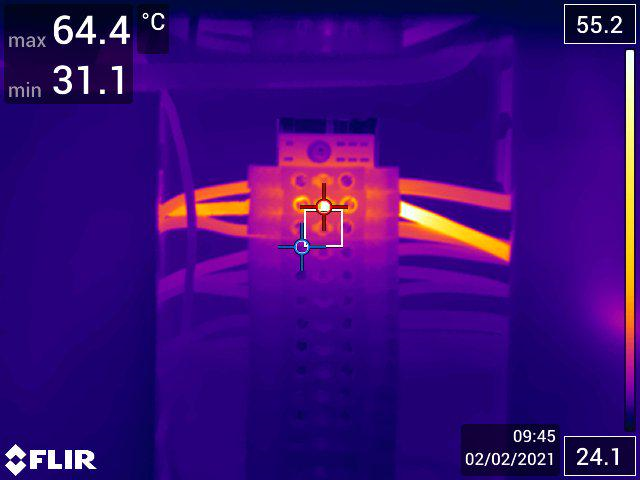
Thermal spot indicating faulty cable connection.

The Critical Role of Thermal Scanning in High-Rise Maintenance

Given the scale and complexity of electrical systems in high-rise buildings, early identification of potential issues is crucial. Electrical thermography brings a proactive approach to building maintenance in Melbourne, ensuring that your electrical systems are running optimally and reducing the risk of unexpected failures.

For high-rise building asset management companies and maintenance contractors, thermal scanning Melbourne offers several key advantages:

  1. Predictive Maintenance: Electrical thermography provides early detection of potential electrical issues, allowing teams to schedule repairs in advance and avoid unexpected breakdowns and costly emergency repairs.
  2. Safety: Overheating electrical components can be a fire hazard. Regular thermal scanning Melbourne helps prevent such situations, ensuring the safety of the building’s occupants.
  3. Efficiency and Cost Savings: By avoiding unexpected failures and the resultant downtime, electrical thermography supports smooth operations and lower maintenance costs.

Why Choose Thermal Scanners for Thermal Scanning Melbourne?

As pioneers in the field of electrical thermography, we offer a comprehensive suite of services designed to meet the needs of high-rise building asset management companies and maintenance contractors in Melbourne.

Our team of certified thermographers is equipped with the latest technology, enabling them to provide accurate, reliable, and actionable results. With our in-depth reports, you’ll gain clear insights into your building’s electrical system, empowering you to make informed decisions and strategize your maintenance efforts effectively.

Thermal Scanners technician inspecting electrical switchboards

The Bottom Line

Electrical thermography plays an integral role in the maintenance of towering structures in Melbourne. It enables you to tackle potential issues head-on, maintaining the operational efficiency and safety of your buildings. Furthermore, this proactive approach to maintenance can lead to significant cost savings, by reducing the need for reactive maintenance and the potential impact of emergency shutdowns.

At Thermal Scanners, we are passionate about providing top-tier electrical thermography and thermal scanning Melbourne services.

Contact us today, and let’s work together to enhance the safety, efficiency, and longevity of your high-rise buildings, fostering a smooth operation and satisfaction among your tenants.

The Importance of Regular Switchboard Electrical Thermography

The world of commercial real estate is an intricate matrix of countless moving parts. A single glitch can disrupt a harmonious operation, which could be costly. That’s why, as a landlord, preventative maintenance should be high on your priority list. A particularly crucial aspect of this involves your property’s electrical systems, where potential issues can lie hidden, only to surface when you least expect them. This is where the power of electrical thermography comes into play.

At Thermal Scanners, we are the industry leaders in electrical thermography. We help businesses identify, mitigate, and prevent electrical faults before they escalate into disruptive, costly, and sometimes dangerous situations. In this blog, we aim to provide you with an in-depth understanding of electrical thermography and how regular electrical switchboard scanning can significantly contribute to the smooth operation of your commercial properties.

What is Electrical Thermography?

In simple terms, electrical thermography is a predictive maintenance tool, utilising infrared imaging technology to detect heat emissions from an electrical system. Every electrical component, when functioning, emits heat. However, excessive heat or cold spots, in contrast with similar components under similar load, can indicate potential issues, such as loose connections, overloaded circuits, or insulation failures.

Being a non-contact and non-destructive testing method, electrical thermography allows for inspections while the systems are under load, preventing unnecessary shutdowns and the resulting disruptions to operations.

3 phase circuit breaker with thermal anomaly detected.

The Crucial Need for Regular Switchboard Scanning

Why should landlords invest in regular switchboard scanning? For one, it is an effective way to mitigate risk. By identifying potential electrical issues early, it allows for planned maintenance rather than reactive repairs, reducing downtime and maintenance costs.

Switchboards, being the heart of any electrical system, are the primary distribution point of electricity to various parts of your building. A fault in your switchboard can lead to partial or complete power outages, a serious problem for any commercial landlord. Regular scanning with electrical thermography can catch potential issues early, giving you time to act and prevent larger, more costly problems.

Thermal Scanners: Your Trusted Electrical Thermography Partner

As industry frontrunners in electrical thermography in Australia, we at Thermal Scanners provide a comprehensive range of services. Our team of certified thermographers utilise the most advanced equipment to provide precise, accurate, and reliable results.

We pride ourselves on our client-centric approach. We work closely with you, understanding the intricacies of your specific requirements, and provide bespoke solutions that best address your needs. We believe in not just delivering a service, but in building long-term partnerships, based on trust and mutual growth.

Our professional reports provide clear insights and actionable recommendations, enabling you to make informed decisions for your property maintenance. Our focus is not just to help you discover potential issues, but also to guide you on the steps to mitigate them effectively.

Prevention is Better than Cure

Regular electrical thermography of your switchboard is a preventative measure that ensures the longevity and safety of your electrical systems, preventing unwelcome surprises that could cause operational and financial strain.

For commercial landlords, the advantage of this approach is twofold. Firstly, it ensures the continuous, smooth operation of your building, increasing tenant satisfaction and retention. Secondly, regular maintenance and preventative measures could potentially lower your property insurance premiums, creating additional cost savings.

Damaged switchboard due to thermal fault/arc flash leading to costly repairs/replacement

Conclusion

As a commercial landlord, regular electrical thermography scanning is a small investment that brings significant returns, ensuring the efficiency, safety, and cost-effectiveness of your property operations.

At Thermal Scanners, we are committed to providing you with top-tier electrical thermography services. Our expert team, advanced tools, and wealth of experience position us as the best partners to help ensure the long-term success of your properties.

Get in touch with us today, and let’s work together to optimise your commercial property operations, reduce risks, and maximise tenant satisfaction.

Case Study: Inspecting and Fixing a Circuit Breaker

Overview:

A Sydney-based company asked Thermal Scanners to check their electrical equipment due to occasional power outages. They wanted to prevent any electrical issues causing downtime or expensive repairs. Our expert came to the site and thoroughly examined the business’s electrical systems using electrical thermal inspection technology.

Finding the Issue:

The expert found a heat-related problem with a circuit breaker in an electrical panel during the inspection (see image below). Using a thermal imager, they discovered an unusually high temperature, which showed the circuit breaker’s cable connection was getting too hot. The expert informed the maintenance manager and suggested an immediate fix to prevent further damage or safety risks.

Sub-board electrical panel showing thermal fault at circuit breaker cable connection

Repairing the Problem:

The business manager approved the repair, and an on-site electrician quickly addressed the issue. After examining the circuit breaker, the electrician found a loose connection causing the heat problem. They tightened the connection and tested the circuit breaker to ensure it worked properly.

Verifying the Fix:

The expert performed another thermal inspection 20 minutes later and confirmed that the issue was resolved. The thermal imager showed a normal temperature, meaning the circuit breaker was no longer overheating. Thermal Scanners gave the business owner a detailed report of the repair, including before and after thermal images, and suggestions for maintaining the system to prevent future issues.

Sub-board electrical panel showing thermal fault at circuit breaker cable connection

Conclusion:

This case study highlights the value of regular electrical thermal inspections to find potential problems and avoid costly downtime or safety risks. Detecting and quickly fixing the heat issue in the circuit breaker prevented more damage and safety hazards. The business owner was pleased with the inspection and repair process and now knows their electrical systems are working well and efficiently. Thermal Scanners serves many clients across different industries in the Greater Sydney area.

Contact us for a free quote today.

Maximising Efficiency: Electrical Thermal Inspection

Are you tired of managing costly electrical system failures and unexpected downtime? As a business owner or facility manager, it’s essential to keep your electrical system running smoothly for your success. Regular electrical thermal inspections can help. With advanced thermal scanning technology, Thermal Scanners can identify potential issues before they become major problems, saving you time and money in the long run. In this post, we’ll demonstrate how regular electrical thermal inspections can help you enhance efficiency, improve system performance, and ensure the safety of your staff and customers. Let’s explore how this powerful tool can benefit your business.


Understanding the Basics of an Electrical Thermal Inspection

Electrical thermal inspection is a non-invasive method of inspecting electrical equipment and components, which can identify potential faults or failures before they occur. The process involves using infrared cameras to detect temperature variations in electrical systems, which can indicate to us potential issues. Normally humans are unable to see into the infrared spectrum and instead have a very narrow field of vision as shown below.  However, with special equipment we are able to detect and convert this infrared data into a visual image.

Normal field of vision for humans:

Image showing Visible Light spectrum

What are the common problems in electrical systems?

  • Underrated cables / equipment
  • Rust and degradation
  • Unbalanced loads
  • Loose terminations
  • Malfunctioning equipment

Compared to visual inspections or load testing, electrical thermal inspections are more effective at identifying potential problems early on, before they can cause significant damage or downtime. By conducting regular electrical thermal inspections, businesses can improve electrical system performance.


The Benefits of Electrical Thermal Inspection for Preventive Maintenance

Electrical thermal inspections are an excellent tool for businesses to perform preventative maintenance on their electrical systems. By using infrared cameras to detect temperature variations in electrical equipment, potential problems can be identified before they cause major damage or downtime. There are many benefits to conducting regular electrical thermal inspections as part of a preventative maintenance program.

Thermal Imager used by Thermal Scanners

Top 5 benefits to conducting electrical thermal inspections

  1. Early detection of potential issues before they become major problems
  2. Improved safety for workers and equipment
  3. Reduced energy consumption and costs
  4. Increased equipment lifespan and reduced maintenance costs
  5. Improved compliance with regulations and standards

By taking advantage of the benefits of electrical thermal inspections, businesses can improve the reliability and efficiency of their electrical systems. Preventative maintenance can reduce costs, extend the lifespan of equipment, and ensure compliance with safety and industry standards. Overall, electrical thermal inspections are an excellent investment in the long-term success of a business.


Common Electrical System Issues That Can Be Detected with an Electrical Thermal Inspection

Electrical thermal inspections are a powerful tool for identifying common electrical system issues that can cause major problems if left undetected. Some common electrical system issues that can be detected with an electrical thermal inspection include:

  1. Loose connections – electrical connections that are loose or corroded can cause increased resistance and heat, leading to equipment failure or fire.
  2. Overheating – when electrical components are working too hard, they can generate excess heat, leading to equipment failure and potential fire hazards.
  3. Insulation defects – faulty insulation can cause electrical leakage, leading to overheating and the potential for electrical fires.
  4. Load imbalances – uneven electrical loads can cause equipment to overheat and fail prematurely.
  5. Circuit breaker issues – faulty circuit breakers can cause equipment to operate at the wrong voltage, leading to increased energy consumption and equipment failure.
Loose cable connection on circuit breaker

By detecting these issues early with an electrical thermal inspection, businesses can take corrective action and prevent major damage or downtime.

Electrical Thermal Inspection vs. Traditional Inspection Methods

There are two main options for inspecting electrical systems: electrical thermal inspection and traditional inspection methods. While both can be effective, businesses should consider some key differences between the two when choosing which is best for their needs.

Electrical thermal inspection uses infrared cameras to detect temperature variations in electrical equipment. It’s non-invasive and can detect hidden issues that visual inspection may miss. Traditional inspection methods, on the other hand, are more comprehensive and may include load testing to identify issues not caught by thermal scanning alone.

To help you better understand the differences between these two inspection methods, the following comparison table outlines some key points to consider:


CriteriaElectrical Thermal InspectionTraditional Inspection Methods
Methodology   Uses infrared cameras to detect temperature

variations in electrical equipment

Typically involves visual inspection and/or load testing
Invasiveness    Non-invasiveCan be invasive depending on the type of testing performed
Hidden Issues     Can identify hidden issues that may not be apparent     

through visual inspection

May not identify hidden issues that can be detected through

thermal scanning

SpeedCan be performed quickly and efficientlyMay take longer to complete depending on the scope of testing
CostCan be more cost-effective than traditional

inspection methods

May be more expensive depending on the type and scope of testing


Is an Electrical Thermal Inspection right for your business?

Deciding whether to choose electrical thermal inspection or traditional inspection methods depends on your business’s specific needs. If you want a non-invasive, cost-effective way to detect hidden issues in your electrical system, electrical thermal inspection may be the right option for you. However, if you require a more comprehensive inspection that includes load testing and other types of assessments, traditional inspection methods may be a better fit.

Electrical thermal inspections are beneficial for businesses across different industries. Thermal Scanners can identify potential issues early on, reducing the risk of equipment failure, downtime, and safety hazards. Additionally, regular electrical thermography maintenance can help extend the life of electrical equipment and lower overall maintenance costs. As technology advances, we can expect more developments in the electrical thermal inspection industry. By investing in regular electrical thermal inspections, businesses can enhance their performance, safety, reduce maintenance expenses, and avoid legal and regulatory issues.

Schedule a free quote with us today to learn more.

Case Study: Melbourne Electrical Fault

Thermal Scanners were contacted to perform Thermal Imaging on a tavern located in Melbourne in order for them to maintain their insurance policy.  The Melbourne tavern was constructed within the last 20 years and had a relatively modern electrical system in place with a total of 5 switchboards including:

  • Main Switch Board With 2 sections,
  • 2 x Distribution Boards, and
  • TAB Sub Board

In order to perform the most accurate survey, Thermal Scanners organised to conduct the thermal survey during the busy lunch period for the Melbourne tavern, in which the largest amount of electrical load would be on the site.  It was noted that the site was drawing large electrical load due to the temperatures found on the Main Isolator being 50°C, whereas a low load would cause the Isolator to be closer to ambient temperature.

Main Isolator Under A Heavy Electrical Load

The elevated temperature is not a problem as this is still operating well within the operating temperatures of both the isolator and cable, however it is good to note that the survey will be performed under sufficient load.  When completing a Thermal Imaging Survey, Thermal Scanners also complete a visual check of all the boards, cables and equipment to ensure that they are safe and have no damage such as corrosion, evidence of a fire and that the boards are appropriately secured.  The Melbourne Tavern had no visual faults during the survey, however when carrying out the Thermal Survey a hot spot was located on the Neutral Bar.

Hot Screw Connection On Neutral Bar

This fault found on the Melbourne Taverns Neutral Bar is what we would categorise as a level 2 thermal exception requiring investigation in the very near future.  At first it appeared like this fault was most likely due to a loose connection where the connecting cable is loose and creating a high resistance location.  Although when examined closer in the visual spectrum we can see that the screw used is actually of a different material composition.

Neutral Bar, Incorrect Screw Material

These two different materials connecting and passing electrical current through them create a hot resistance connection.  This problem is then a simple rectification for the Melbourne Tavern to have their preffered electrical contractor attend site and replace the neutral bar screw to the correct material composite.

If you want any more information on a Thermal Survey, or the work that we perform then don’t hesitate to reach out through our website.

Thermal Scanning Electrical

Thermal Scanning is the use of a thermal imager to detect heat energy, which can then be converted into a visible image (for more detail see What Is Thermal Scanning).  One of the major applications for thermal imaging is to verify the health of electrical systems, leading to early detection of faults, even before the human eye can see them.  

Why can thermal scanning be used on electrical systems?

Thermal scanning can be utilised on any electrical system as it creates heat energy as a waste byproduct, or sometimes even as the main purpose such as a heater! Both heat and electrical energy are measured in the same way; joules of energy or watts if we account for time.  The amount of energy is directly proportional to the amount of voltage and current being used.

Thus, when we examine a 20 Amp fuse operating at more than 20 Amps of current with a thermal camera, we can see the elevated temperature when compared to other similar components.  In this case the amount of current was verified by attaching a clamp meter and measured at 30 amps; indicating that either the fuse needs to be resized or the load rebalanced to ensure an optimal electrical configuration.

Electrical Thermal Scanning
Electrical Thermal Scanning of an over-loaded Fuse

What benefits are there of getting thermal scanning completed on my electrical infrastructure?

As mentioned, thermal scanning is able to pick up issues before they become apparent to the naked eye.  Some of these benefits include:

  • Minimising the risk of fire and damage due to failure of components,
    • Which ensures peace of mind for you as the owner.
  • Reduce cost of repairs by only replacing faulty components,
    • When the location of a fault is known the component can be replaced or repaired quickly without having to replace multiple items!
  • Scheduling in shutdowns so they can be completed with other works,
    • As we find faults early, this allows problems to be fixed with other routine maintenance.
  • Preventing unexpected loss of power,
    • When components fail they can either do so by catching fire, exploding or just failing.  Some of these are worse than others, but all will result in the loss of power potentially costing millions of dollars in down time.
  • Identify overloaded circuits or under rated cables, and
    • When cables and fuses aren’t rated properly the chances of failure increase, however thermal scanning can detect these problems quickly and efficiently.
  • Ensuring longevity of components through balanced loads.
    • Unbalanced loads are one of the more common problems in electrical,  where the phases haven’t been balanced causing excessive heat generation through specific components.

Thermal imaging can detect a range of different problems with electrical infrastructure which can range from the obvious overheating components to something as simple as loose and poorly terminated connections.  Some of the major ones we encounter on a daily base include:

  • Loose terminations,
  • Underrated cables,
  • Rust and degradation,
  • Unbalanced loads, and
  • Malfunctioning equipment.

To help put into perspective how bad some of these faults can be even before failure, we have provided an image of one of the worst thermal faults we have ever found with a peak temperature above 500°C!

Even in the above photo (without feeling the heat), it would be extremely difficult to detect this fault without the use of thermal imaging, even though this component is about to fail and potentially catch fire!