
RCD Testing & Safety Switch Checks
- Qualified electricians with 30 years of experience
- Safety switch (RCD) testing under normal operations
- Distribution board level RCD checks
- Verified trip times using calibrated equipment
- Insurance-ready RCD compliance reporting
- Safety-focused testing with minimal disruption
Book an inspection
Understanding RCD Testing
Residual Current Devices (RCD), also known as safety switches, disconnect power when electrical leakage is detected. This helps reduce the risk of electric shock and electrical fire.
Regular RCD checks confirm the device trips within the required limits. Thermal Scanners provides compliant RCD trip time testing aligned with AS/NZS 3760:2022 and can be delivered alongside our broader thermal scanning services.
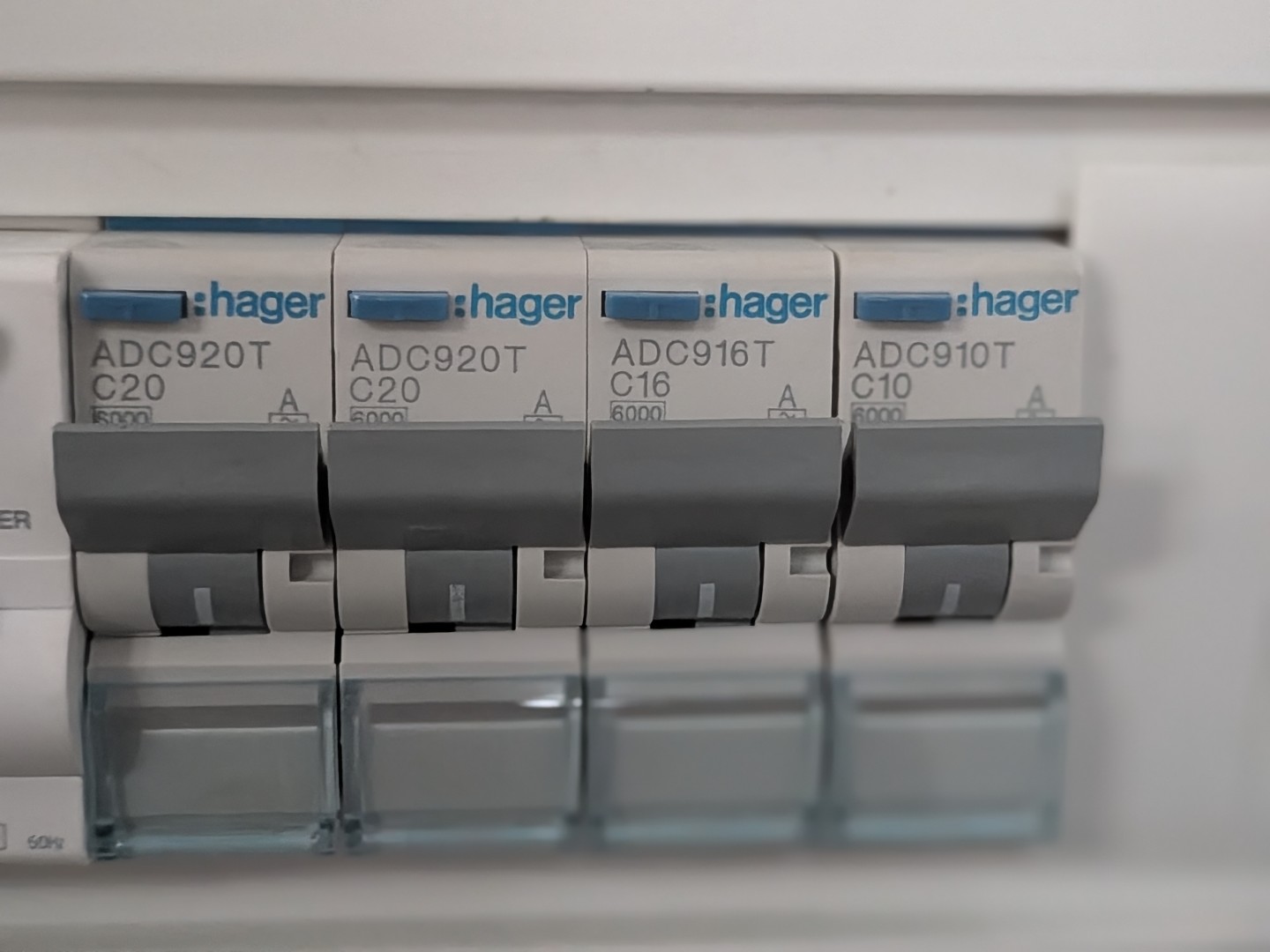
Safeguard Health and Safety with RCD Trip Time Testing
An RCD protects against electrocution by monitoring electrical current imbalances. When an imbalance is detected, the device rapidly disconnects the power. These imbalances can occur for several reasons, including:

Accidents
Damage to wiring during repairs or renovations, dropping heavy objects on equipment or spilling liquid on electrical components.

Damaged Insulation
Physical wear or environmental factors, such as heat and moisture, can degrade wire insulation, increasing the risk of dangerous current leakage.

Improper Wiring
Loose connections, faulty wiring practices and incorrect installation of electrical outlets, switches or junction boxes.

Moisture Intrusion
Water or humidity entering electrical equipment or wiring. This can also include condensation on electrical components.

Faulty Appliances
Malfunctioning or damaged appliances, including worn cords and plugs, can cause electrical leaks and surges.
Schedule an inspection
If the RCD is not functioning correctly, faults could escalate, causing severe electrical shocks, damage to equipment, or fire risks. Contact us now to schedule regular testing and ensure your safety devices operate efficiently in the event of an electrical incident.
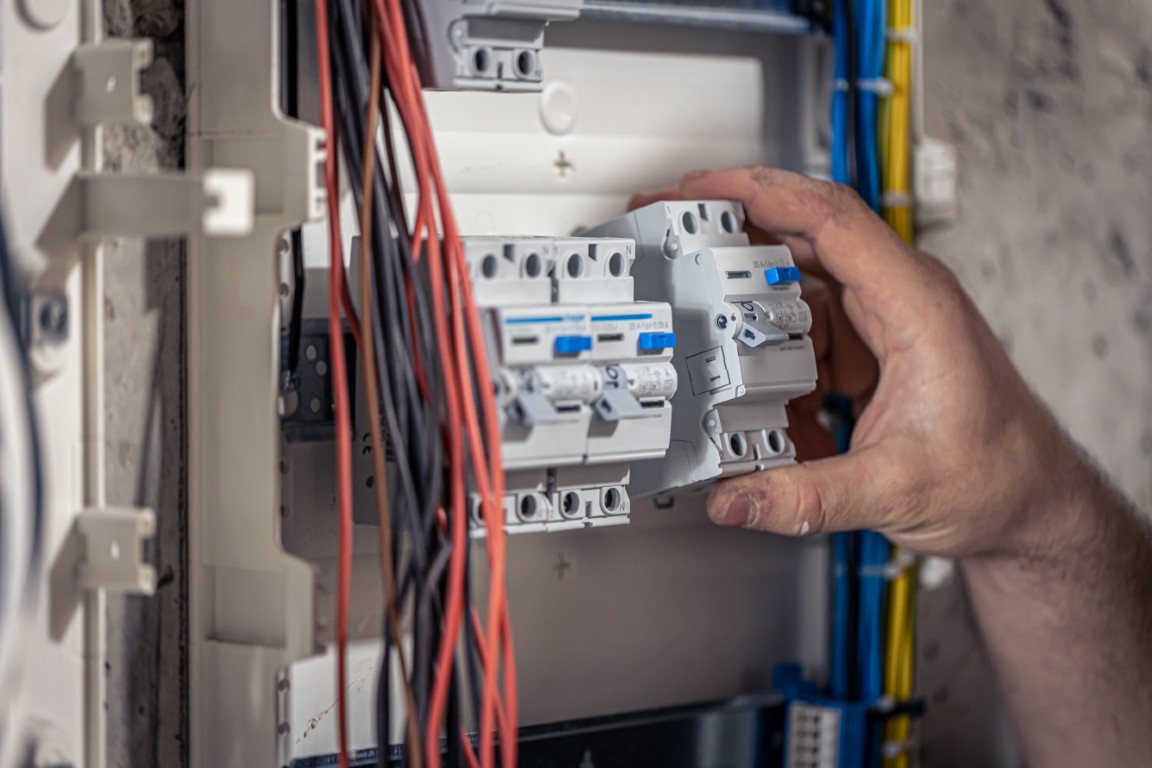
Types of RCD Trip Time Testing
There are two recognised methods used to verify that safety switches are operating correctly.
Push Button Test
A simple yet effective test that anyone who is trained and competent can perform. This quick check ensures your RCD is operational and ready to protect. Regardless of the site type, push-button testing is required every six months. We recommend clients perform this test themselves to save costs, as it is a low-risk and straightforward task.
Trip Time Test
A calibrated test that measures how quickly the RCD disconnects power under fault conditions. An RCD must trip within defined time limits to provide effective protection from electric shock. This test must be carried out by a licensed and certified electrician using calibrated and suitable equipment.
Safety switch testing is often completed alongside broader electrical risk assessments such as electrical thermal imaging, mechanical thermal scanning and cold room thermal imaging, providing a more complete view of asset condition and electrical safety.
Contact us today to schedule a professional test of your RCD safety switches and keep your home or workplace protected.
How Often Should RCD Testing Be Conducted?
According to AS/NZS 3760, the required frequency for RCD testing varies depending on the site:
Commercial and Industrial Sites
Safety switch testing is required every 12 months to maintain electrical safety and compliance.
Residential and Hotels/Guest Accommodation
Testing must be conducted every two years.
Push-Button Tests
Across all site types, push-button testing is required every six months. This check can be completed by a suitably trained site representative but does not replace a full RCD trip time test.
Indicative testing and inspection intervals for electrical equipment should always be confirmed against current standards and site conditions.
| Type of environment and/or equipment | Equipment including | Interval between inspection and tests | ||||
|---|---|---|---|---|---|---|
| Class 1 equipment, cord sets, cord extension sets and EPODS | Residual current devices | Push-button test - by user | Operating time and push-button test | |||
| Factories, workshops, places of manufacture, assembly, maintenance or fabrication | 6 mths | Daily, or before every use, whichever is the longer | 6 mths | 6 mths | 12 mths | 12 mths |
| Environment where the equipment or supply flexible cord is subject to flexing in normal use OR is open to abuse OR is in a hostile environment | 12 mths | 6 mths | 6 mths | 6 mths | 12 mths | 12 mths |
| Environment where the equipment or supply flexible cord is NOT subject to flexing in normal use and is NOT open to abuse and is NOT in a hostile environment | 5 yrs | 3 mths | 6 mths | 6 mths | 2 yrs | 2 yrs |
| Residential type areas of: hotels, residential institutions, motels, boarding houses, halls, hostels accommodation houses, and the like | 2 yrs | 6 mths | 6 mths | 6 mths | 2 yrs | 2 yrs |
| Equipment used for commercial cleaning | 6 mths | Daily, or before every use, whichever is the longer | N/A | 6 mths | N/A | N/A |
| Hire equipment: Inspection Test and Tag | Prior to hire | Including push-button test by hirer | N/A | N/A | N/A | N/A |
| Repaired and service equipment | 3 mnths | N/A | N/A | 3 mths | 12 mths | 12 mths |
| Second-hand equipment | For second-hand equipment AS/NZS 5761 applies (refer to clause 2.2(c)) | N/A | N/A | N/A | N/A | N/A |
How RCD Testing is Conducted
Thermal Scanners follows a consistent, standards-aligned process to ensure accurate RCD testing and reliable results. This provides a clear view of RCD performance and supports defensible electrical compliance outcomes.
Our RCD testing process includes:
- Testing conducted at the electrical distribution board
- Coverage of both power and lighting circuits
- Trip time measurement under simulated fault conditions
- Testing on positive and negative wave cycles
- Identification of worst-case disconnection times
- Assessment against AS/NZS 3760 requirements
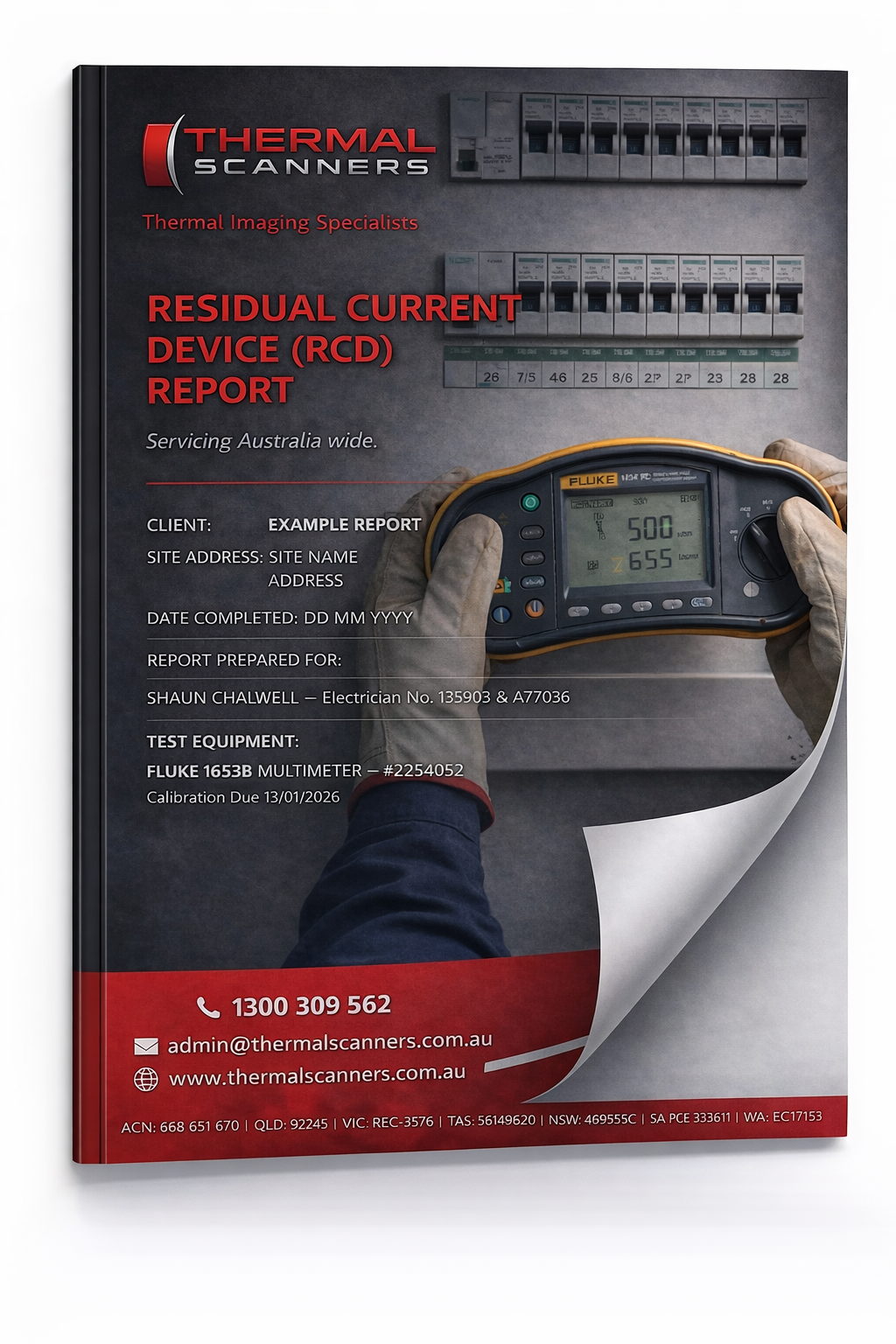
Comprehensive RCD Testing Reports You Can Rely On
Clear, accurate reporting is a critical part of compliant RCD testing. After completing each safety switch test, Thermal Scanners provides a comprehensive compliance report that documents performance, identifies any non-compliant devices and supports safety audits, insurer requirements and internal records.
Our RCD testing reports are structured to align with in-service safety inspection requirements under AS/NZS 3760:2022 and are suitable for use across commercial, industrial and government environments.
Each report includes:
- A clear scope of works and testing summary
- Individual RCD identification and location
- RCD classification and circuit type
- Trip time results, with any failures clearly highlighted
- Date of testing and asset references
- Additional observations where relevant
- Technician qualifications
- Certificate of Testing and Compliance
For Queensland sites, compliant RCD checks may also support exemption from certain Test and Tag requirements, depending on installation type and site conditions, helping streamline ongoing compliance obligations.
Thermal Scanners’ reporting is designed to be practical, defensible and easy to interpret, giving stakeholders confidence that RCD checks have been completed correctly and in line with current standards. More detail on in-service safety inspection requirements is available under AS/NZS 3760:2022 via Standards Australia.
Expert RCD Testing Across All Sectors
Thermal Scanners delivers RCD testing services across a wide range of environments where electrical safety, compliance and operational reliability are critical. Our experience spans both routine compliance programs and complex, high-risk infrastructure.
We support RCD checking for:
Frequently Asked Questions
What is the difference between a safety switch and a circuit breaker?
A circuit breaker protects wiring and electrical equipment from overloads and short circuits. A safety switch, also known as an RCD, is designed to protect people by disconnecting power when electrical leakage is detected, reducing the risk of electrocution.
Can RCD testing cause downtime for my business?
RCD trip time testing requires a brief power interruption. Thermal Scanners plans testing carefully and works with site teams to minimise disruption and maintain continuity of operations wherever possible.
Can I perform RCD testing myself using the 'Test' button?
The push-button test can be performed by a qualified specialist and confirms that the RCD can trip. A full operating time test measures how quickly the device disconnects power and must be completed by a technician using calibrated test equipment.
Do I need to test RCDs in a new commercial building or after renovations?
Yes. Under AS/NZS 3000, all new electrical installations and altered circuits must have RCDs tested before they are commissioned and placed into service.
Partner with Thermal Scanners
Thermal Scanners is a trusted provider of RCD testing and electrical compliance services for organisations managing complex electrical infrastructure. With electrical thermography as our core service and highly qualified technicians and extensive experience across large commercial and government sites, we deliver reliable testing and audit-ready reporting.
If you need compliant RCD testing or support with RCD checks as part of an electrical safety program, contact Thermal Scanners to discuss your requirements.