Case Study: Electrical Hottest Fault

Thermal Scanners conduct hundreds of thermal scans per year at locations all around Australia. As such we are used to seeing faults regularly that surprise our clients. Sometimes the faults we find on site even shock us. This is because the faults can reach extreme temperatures that show failure is imminent.

Below we will show some of the highest temperature faults that we have found on a variety of sites, ranging from body corporates, private organisations and public buildings.

Fuse Holder above 100°C

Most often when we find thermal exceptions they appear on the terminations that connect to the cables.  However this fault extends to the actual component, in this case a fuse.  The fuse pictured below is designed to operate up to 80°C when there are no other fuses directly next to it.
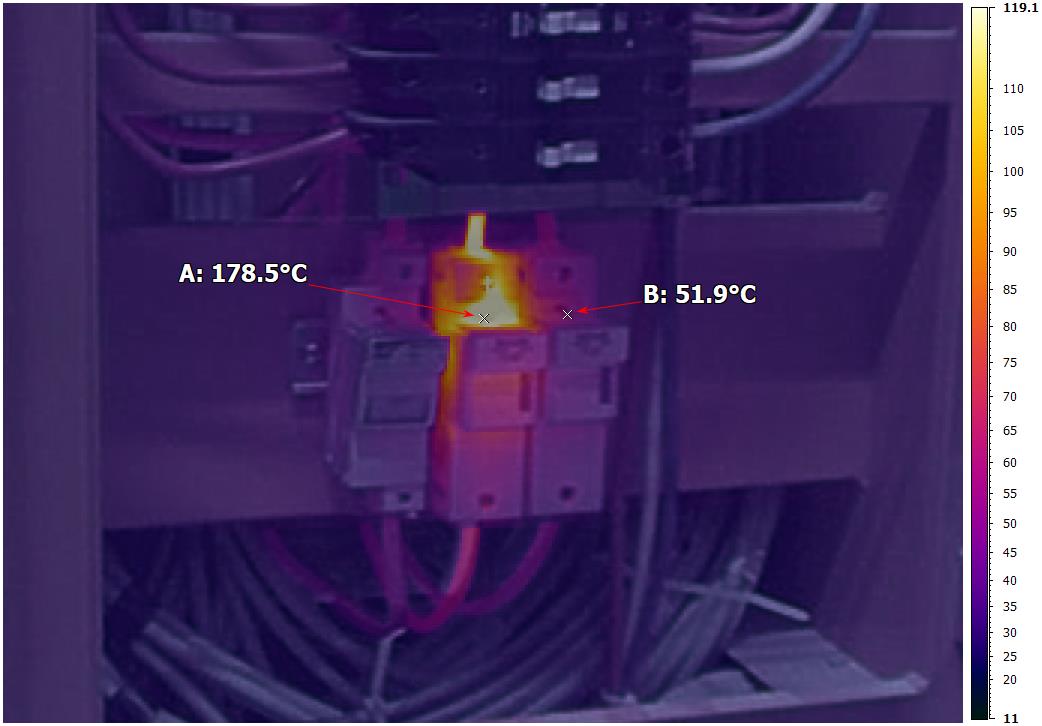
Thermal fault on a fuse.

In this case the fuse is actually the hottest part and is operating well beyond its operating temperature, which potentially could have been life threatening as it has not tripped indicating there could be a problem in the circuit.  A visual image of this fault is shown below which shows the physical burns and damage to the fuse holder.
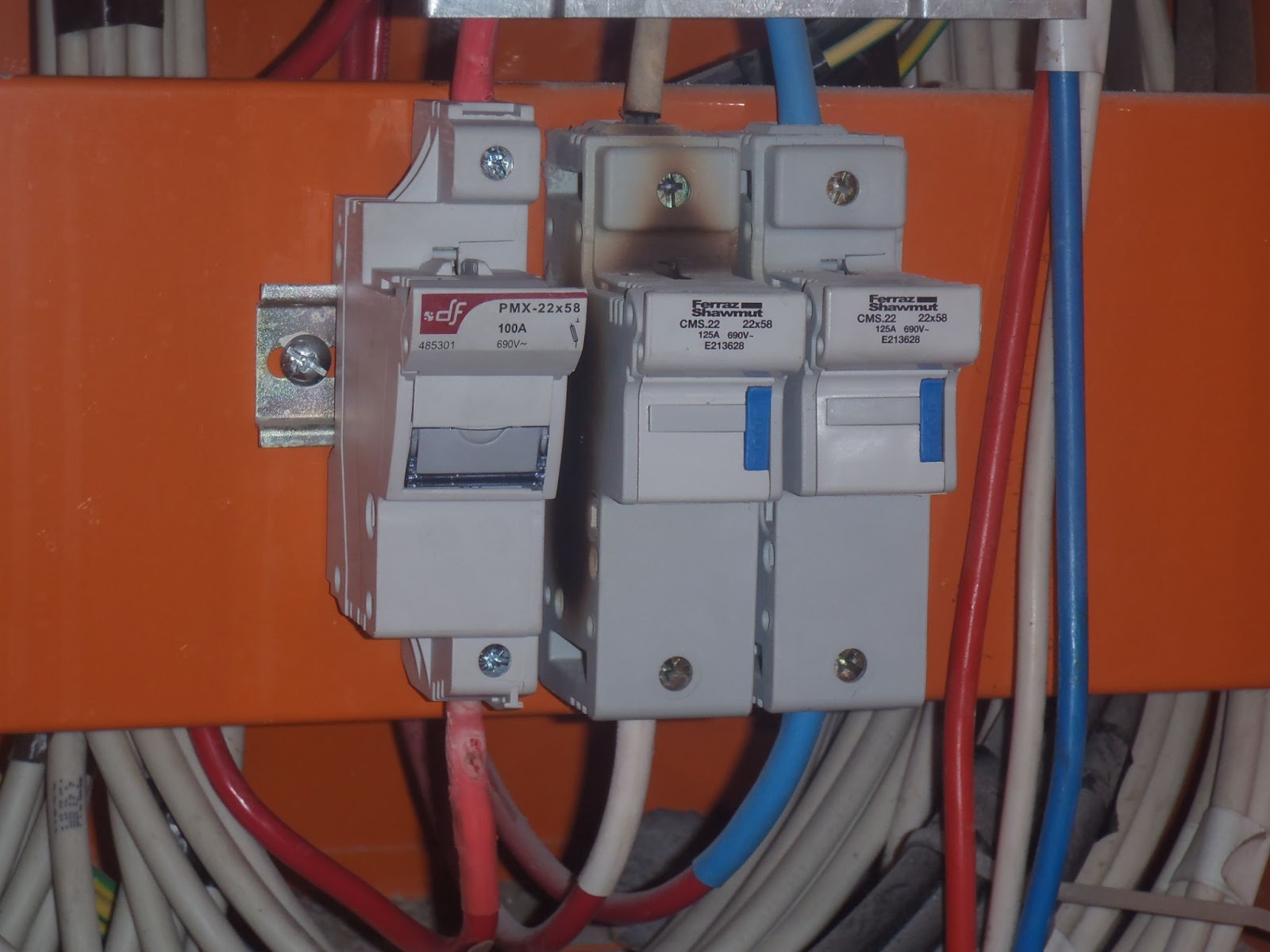
Even with the fuse burnt and damaged the circuit above is still live, active and complete!

Contactor above 200°C

In our work Thermal Scanners has found that sometimes cables have been physically burnt or damaged and yet at the time of scanning there is no load and hence no excessive temperature.  In the follow photo this is not the case and the component is still under load and has burns far beyond the typical:
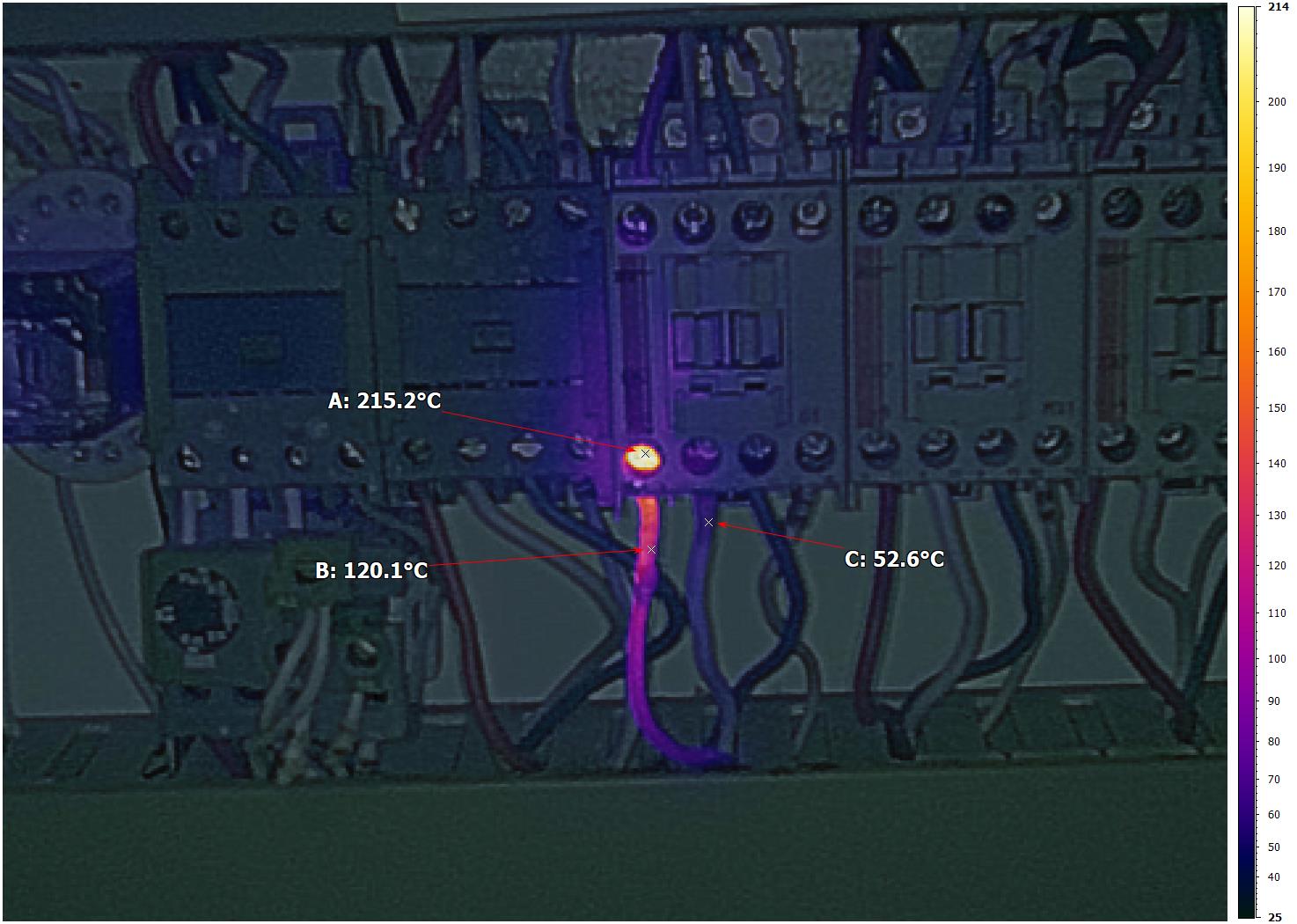
Thermal fault on contactor

The above thermal image shows a maximum temperature in excess of 200°C and this is conservative due to our emissivity settings.  It can be seen that the cable is also above 100°C for a considerable length beyond the termination. Even the adjacent cable is affected by this heat!  To better show the effect of this increased heat we have also included a visual photo.
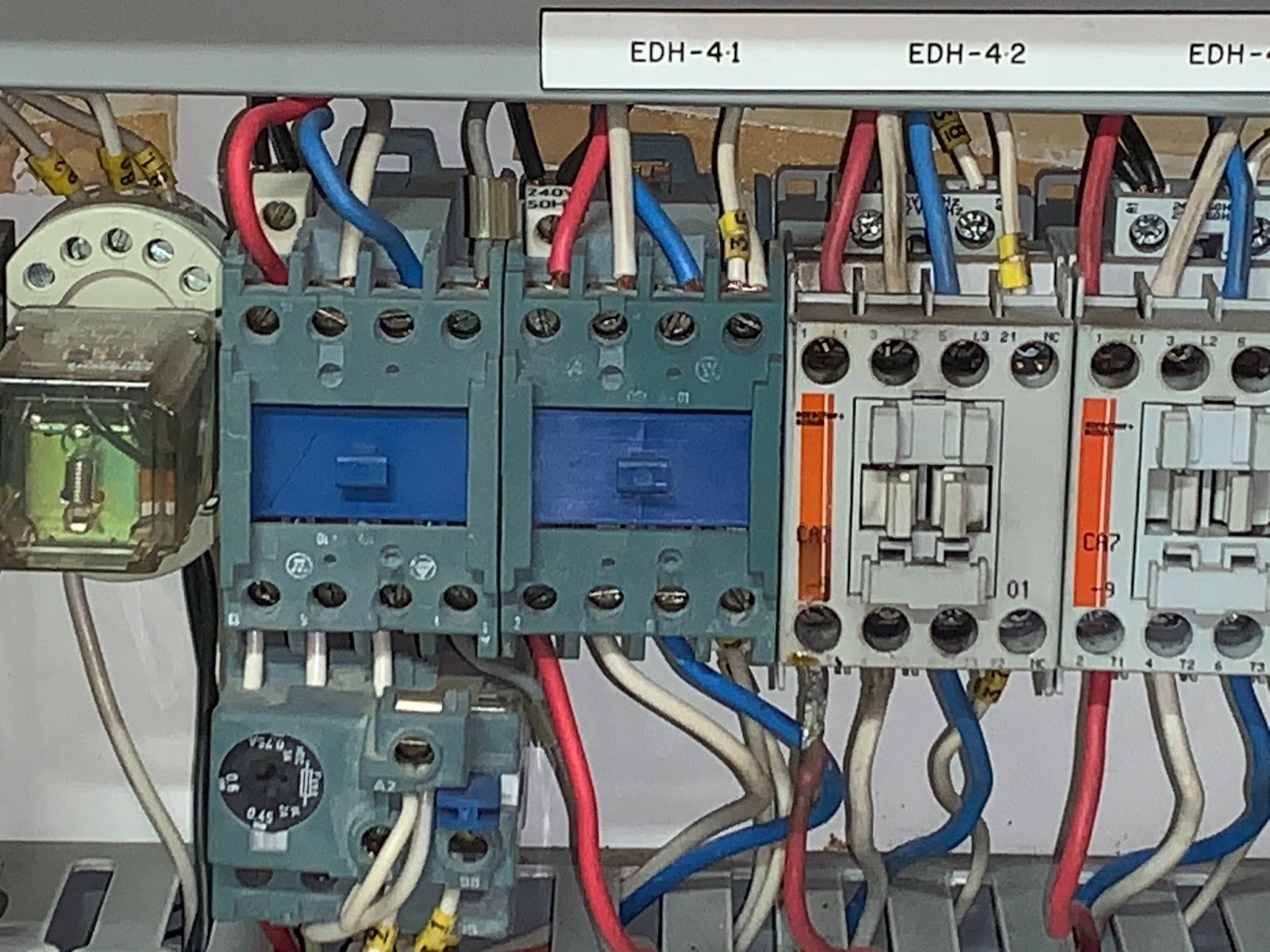
Visual photo of burns to cable

As can be seen the fault has actually caused the insulation on the cable to melt, exposing live electrical wires. Further it has begun to melt and damage the components outer casing.  If this fault was not detected an electrical fire may have resulted as soon as the next couple of days.

Circuit Breaker Above 500°C

In 2020 we completed Thermal Imaging on a customers commercial premise and during completion of the service we found a thermal exception on the wire and termination of a 3 phase circuit breaker. 
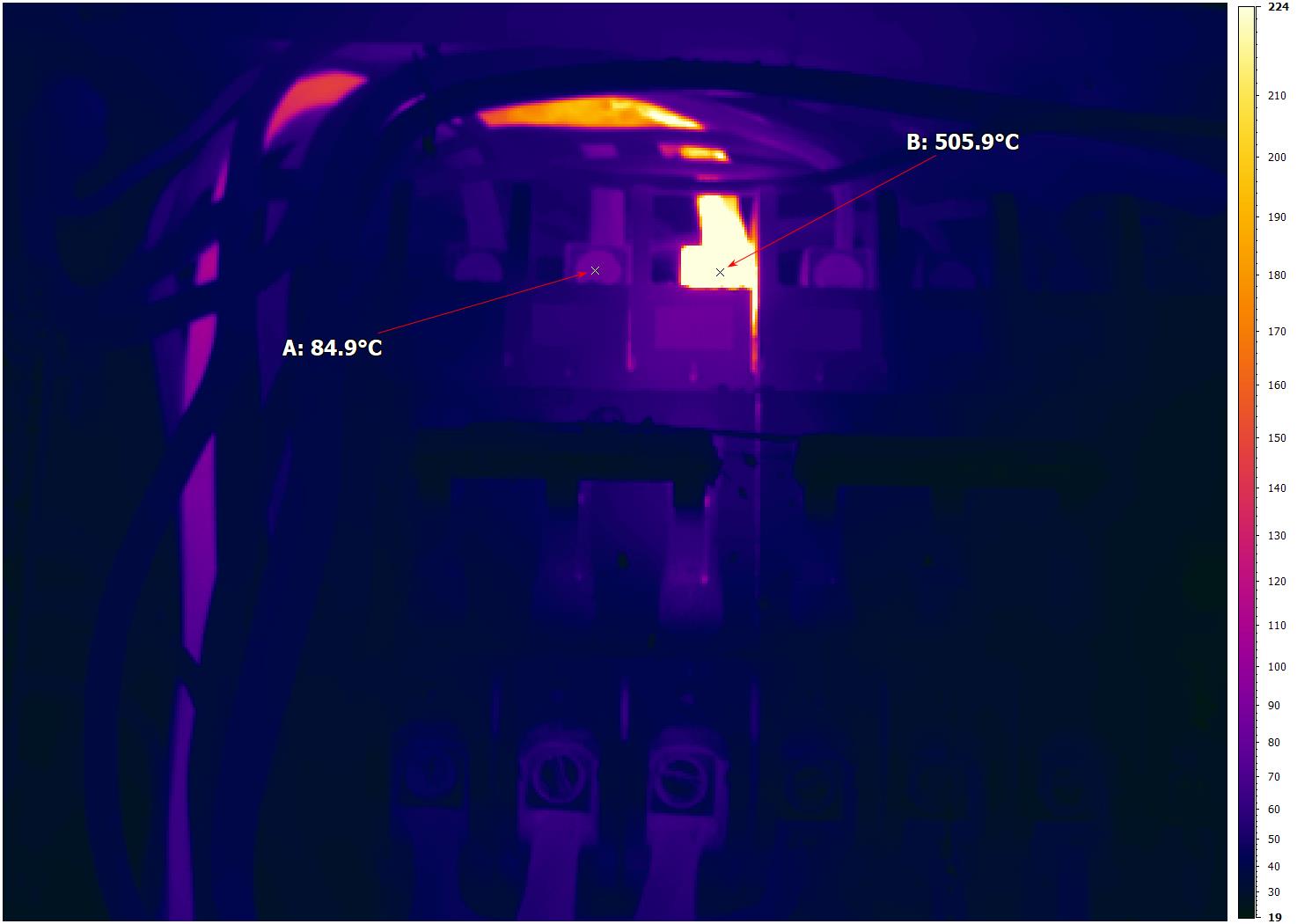
Thermal fault over 500°C on circuit breaker

Keep in mind that most circuit breakers have an operating temperature of up to 85°C including these ones manufactured by Heinemann.  With a maximum temperature in excess of 500°C this circuit breaker is operating at almost 6x its maximum recommended temperature and will almost certainly cause an electrical fire!

We hope that seeing some of these faults helps individuals and companies understand why annual thermal imaging is required on switch boards.  If any of the above faults were not detected these could have easily caused large scale loss of power and even caused an electrical fire in the immediate future with serious ramifications.

Thermal Scanning Electrical

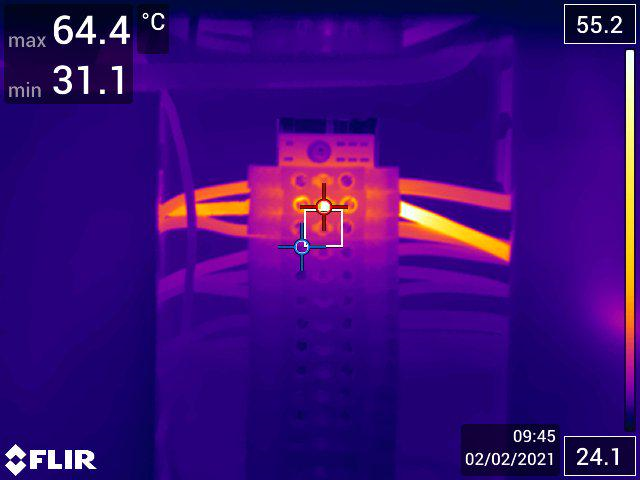
Thermal Scanning is the use of a thermal imager to detect heat energy, which can then be converted into a visible image (for more detail see What Is Thermal Scanning).  One of the major applications for thermal imaging is to verify the health of electrical systems, leading to early detection of faults, even before the human eye can see them.  

Why can thermal scanning be used on electrical systems?

Thermal scanning can be utilised on any electrical system as it creates heat energy as a waste byproduct, or sometimes even as the main purpose such as a heater! Both heat and electrical energy are measured in the same way; joules of energy or watts if we account for time.  The amount of energy is directly proportional to the amount of voltage and current being used.

Thus, when we examine a 20 Amp fuse operating at more than 20 Amps of current with a thermal camera, we can see the elevated temperature when compared to other similar components.  In this case the amount of current was verified by attaching a clamp meter and measured at 30 amps; indicating that either the fuse needs to be resized or the load rebalanced to ensure an optimal electrical configuration.

Electrical Thermal Scanning
Electrical Thermal Scanning of an over-loaded Fuse

What benefits are there of getting thermal scanning completed on my electrical infrastructure?

As mentioned, thermal scanning is able to pick up issues before they become apparent to the naked eye.  Some of these benefits include:

  • Minimising the risk of fire and damage due to failure of components,
    • Which ensures peace of mind for you as the owner.
  • Reduce cost of repairs by only replacing faulty components,
    • When the location of a fault is known the component can be replaced or repaired quickly without having to replace multiple items!
  • Scheduling in shutdowns so they can be completed with other works,
    • As we find faults early, this allows problems to be fixed with other routine maintenance.
  • Preventing unexpected loss of power,
    • When components fail they can either do so by catching fire, exploding or just failing.  Some of these are worse than others, but all will result in the loss of power potentially costing millions of dollars in down time.
  • Identify overloaded circuits or under rated cables, and
    • When cables and fuses aren’t rated properly the chances of failure increase, however thermal scanning can detect these problems quickly and efficiently.
  • Ensuring longevity of components through balanced loads.
    • Unbalanced loads are one of the more common problems in electrical,  where the phases haven’t been balanced causing excessive heat generation through specific components.

Thermal imaging can detect a range of different problems with electrical infrastructure which can range from the obvious overheating components to something as simple as loose and poorly terminated connections.  Some of the major ones we encounter on a daily base include:

  • Loose terminations,
  • Underrated cables,
  • Rust and degradation,
  • Unbalanced loads, and
  • Malfunctioning equipment.

To help put into perspective how bad some of these faults can be even before failure, we have provided an image of one of the worst thermal faults we have ever found with a peak temperature above 500°C!

Even in the above photo (without feeling the heat), it would be extremely difficult to detect this fault without the use of thermal imaging, even though this component is about to fail and potentially catch fire!