
Lightning Protection Testing & Inspection – AS 1768:2021
- Qualified technicians with 30 years’ experience
- No interruption to operations
- Inspect under normal operating conditions
- Detailed insurance-compliant reports
- RCD testing also available
- Maximise safety, minimise disruptions
Book an inspection
AS 1768 Lightning Protection System Testing
Lightning protection systems are installed to protect buildings, occupants, and electrical infrastructure from the damaging effects of lightning strikes. However, like any safety system, these installations should be periodically inspected to ensure they remain electrically continuous, mechanically sound, and correctly bonded to the building earthing system.
Thermal Scanners provides professional lightning protection testing, inspection and audit services in accordance with the inspection and maintenance principles of AS 1768:2021 – Lightning Protection.
Our inspections are designed for high-rise commercial buildings and complex facilities, providing building owners and facility managers with a clear assessment of the condition and integrity of their installed lightning protection systems.
This service is an inspection and compliance audit of the installed system, not a design review or engineering verification of the lightning protection design.
As part of a broader preventative maintenance strategy, many clients also combine this service with electrical thermal imaging to help identify hidden electrical faults across critical infrastructure.
What Is a Lightning Protection Inspection?
A lightning protection inspection is a detailed assessment of the installed lightning protection system on a building to confirm that its components remain electrically connected and mechanically intact.
Over time, lightning protection systems can deteriorate due to:
- corrosion
- building modifications
- rooftop plant installation
- damaged conductors
- loose bonding
- connections
- changes to building
- earthing systems
These issues can reduce the effectiveness of the lightning protection system and increase risk during a lightning event.
A professional inspection verifies that the system remains continuous, bonded, and connected to the building earthing system.
Lightning Protection Compliance Under AS 1768:2021
AS 1768:2021 is the Australian standard governing lightning protection systems.
The standard outlines requirements for:
- lightning protection system design
- installation
- inspection
- ongoing maintenance
Regular inspections are recommended to help ensure the lightning protection system remains functional and that deterioration or damage is identified early.
Our inspection methodology follows the inspection and maintenance principles outlined within AS 1768, focusing on verifying the physical condition and electrical continuity of the installed system.
Lightning Protection Inspection Requirements in Australia
Typical lightning protection inspection requirements include:
- verification of continuity from air terminals through to earth
- testing of earthing resistance and reference measurements
- inspection of conductors, bonds, fixings and test points
- assessment of corrosion, damage or deterioration
- confirmation that the system has not been altered or compromised by later building works
These inspections are particularly important for high-rise commercial buildings, industrial facilities, and critical infrastructure where the lightning protection system forms part of the broader building safety framework.
Schedule a Lightning Inspection Today
Ensure your building’s lightning protection system is inspected and maintained with professional compliance reporting and practical recommendations to support safe, reliable operation. Get in touch today to book a comprehensive lightning protection inspection.
What Our Lightning Protection Inspection Includes
Thermal Scanners performs a detailed inspection of accessible lightning protection system components, including:
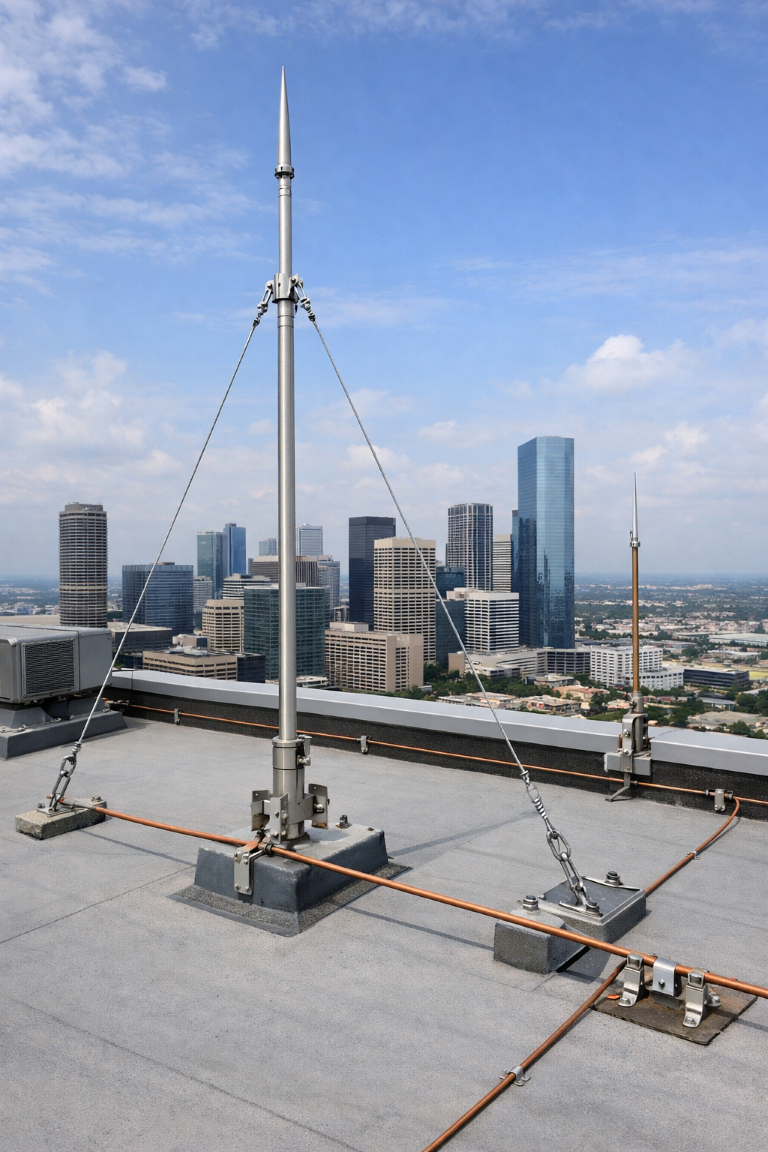
- Air terminals and lightning rods – These components form the primary strike capture system and must remain securely connected to the lightning protection network.
- Roof conductors and down conductors – Down conductors are inspected from roof level where accessible. Inspections are limited to safe access areas and do not include abseiling or external façade access.
- Bonding of roof structures and metallic services – These conductive elements must be electrically bonded to the lightning protection system to ensure they remain at the same electrical potential during a lightning event.
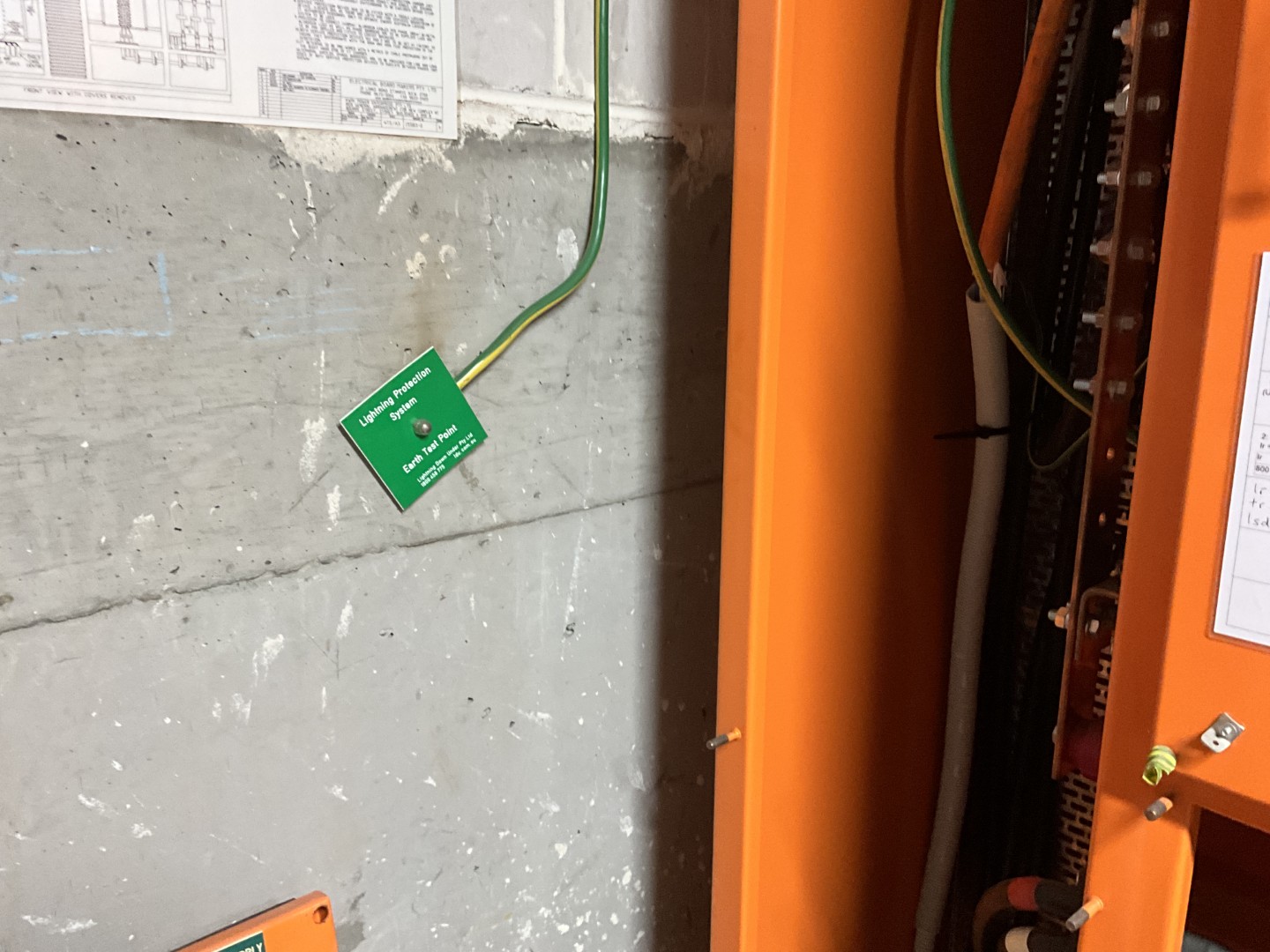
- Lightning test points – Where lightning protection test points are installed, these are inspected and used as part of the electrical continuity verification of the system.
- Earth pits and earthing connections – Where accessible, earth pits associated with the lightning protection system are inspected.
Earth Continuity Testing and Reference Measurements
A key component of the inspection is verifying that the lightning protection system maintains electrical continuity to the building earthing system.
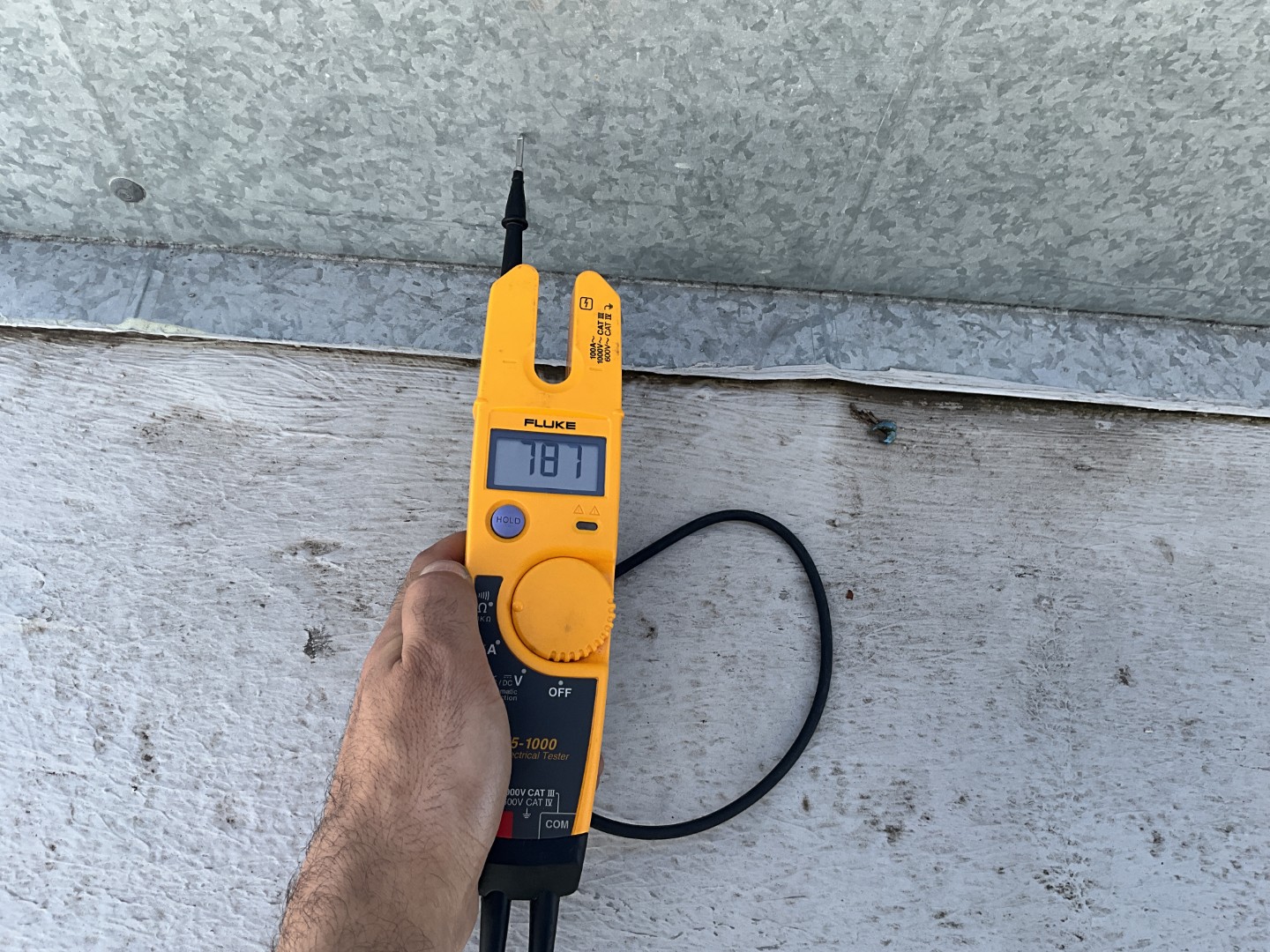
This is achieved through resistance measurements between system components and a known reference earth, typically the nearest switchboard earth.
Measurements are recorded in ohms and included within the inspection report.
This approach provides a practical and conservative method of verifying that rooftop conductive components remain electrically bonded to the building earthing system.
Why Annual Lightning Protection Inspections Are Recommended
Lightning protection systems are exposed to harsh environmental conditions including:
- extreme weather
- UV exposure
- corrosion
- building movement
- rooftop modifications
Regular inspections help ensure that the system remains electrically continuous and that bonding connections have not been compromised.
Annual inspections are commonly undertaken for high-rise commercial buildings and critical infrastructure where lightning protection systems form part of the building safety infrastructure.
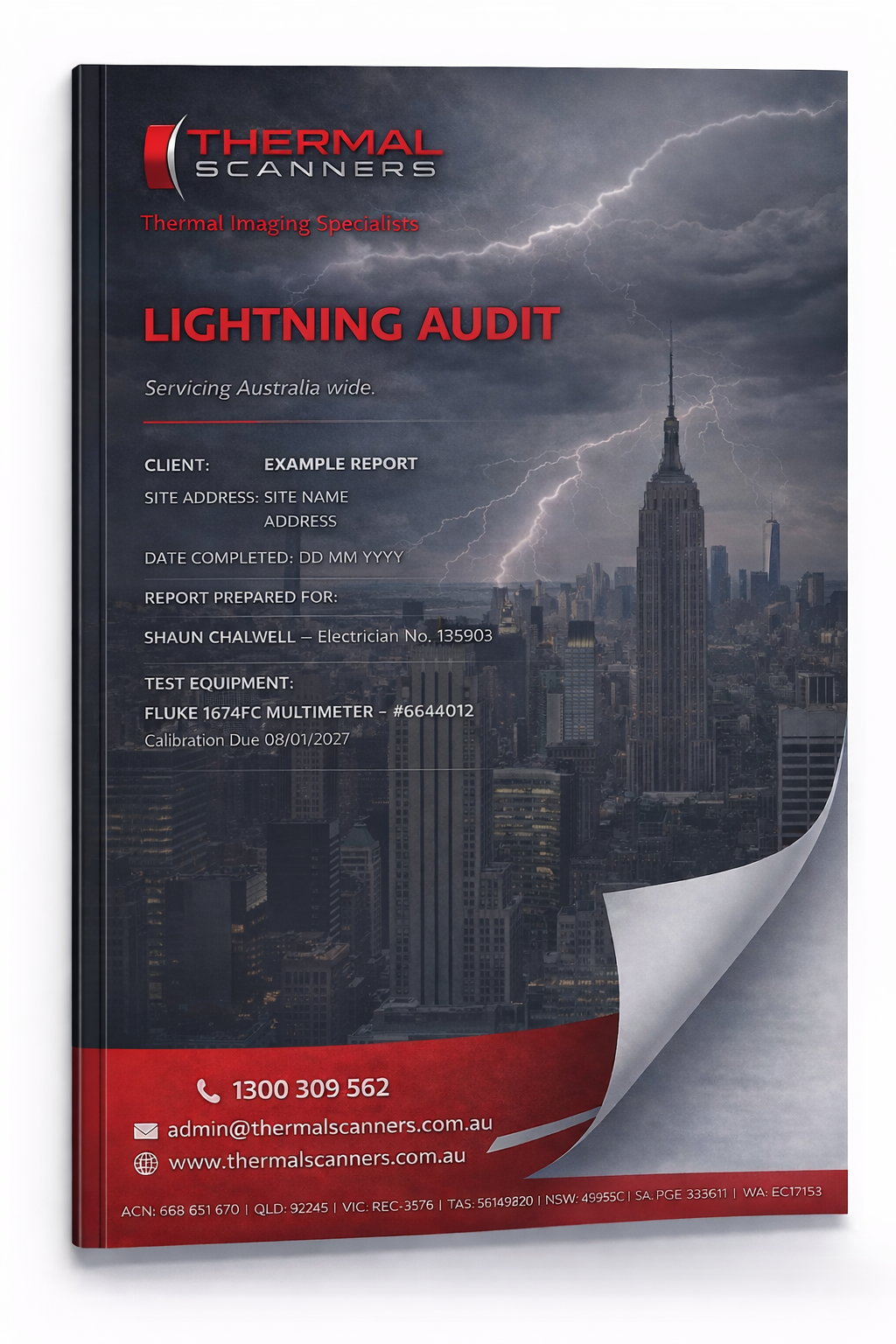
Detailed Inspection Report and Asset Register
Following the inspection, clients receive a comprehensive lightning protection inspection report.
The report includes:
an asset register of inspected components
recorded resistance measurements (Ω) to a reference earth
- identified defects or deterioration
- observations regarding bonding and system condition
- photographic documentation of inspected assets
- recommended corrective actions where issues are identified
Photographs included within the report document the as-found condition of the lightning protection system at the time of inspection, providing clear records for facility management and future inspections.
Where issues are identified, our team can also assist with electrical compliance repairs where required.
Combine Lightning Protection Inspections With Other Services
Frequently Asked Questions
How often should lightning protection systems be inspected?
Inspection frequency can depend on the building type, risk profile, and maintenance program. Many high-rise buildings undertake annual lightning protection inspections to help ensure the system remains electrically continuous and mechanically sound.
What measurements are taken during the lightning audit?
Resistance measurements are taken between lightning protection components and a known reference earth, typically the nearest switchboard earth, to verify the electrical continuity of the system.
Does the inspection confirm the lightning protection system design is correct?
No. The inspection is an audit of the installed system condition only. Verification of system design or lightning protection level requires engineering assessment and is outside the scope of the inspection.
What happens if defects are found?
If issues such as poor bonding, corrosion, or high resistance measurements are identified, these are documented within the report along with recommended corrective actions. Where required, Thermal Scanners can also assist with electrical compliance repairs.
Ensure High Rise Building Compliance
AS 1768 lightning protection inspections are about more than compliance alone; they help support safer working and living environments in high-rise buildings and complex facilities. Don’t take chances with your building’s installed lightning protection system. Contact us today to schedule a professional, efficient and accurate lightning protection inspection.