
Electrical Thermal Scans and Reporting Sydney
Electrical thermal scans and reporting are used to identify hidden heat anomalies in switchboards and electrical infrastructure before they lead to failures, outages or fire risks. Thermal Scanners delivers electrical thermal imaging and reporting across Sydney’s commercial and critical sites, with Residual Current Device (RCD) testing coordinated where required.
This page covers how the service works, what it can detect, how inspections are completed and how reporting supports maintenance planning, insurance requirements and broader risk management programs.
Thermal Imaging and Reporting for Sydney Businesses
Thermal imaging, also referred to as electrical thermal imaging, is used to assess live electrical infrastructure under normal operating conditions. Using calibrated thermal cameras, technicians capture heat patterns across switchboards, panels and connected systems to identify abnormal temperature variations.
Because inspections are completed while equipment is energised, there is no disruption to operations. This makes it suitable for businesses that need to maintain continuity while identifying potential faults.
For facilities teams, this approach supports earlier fault detection, clearer reporting and more informed maintenance planning across commercial and critical sites.
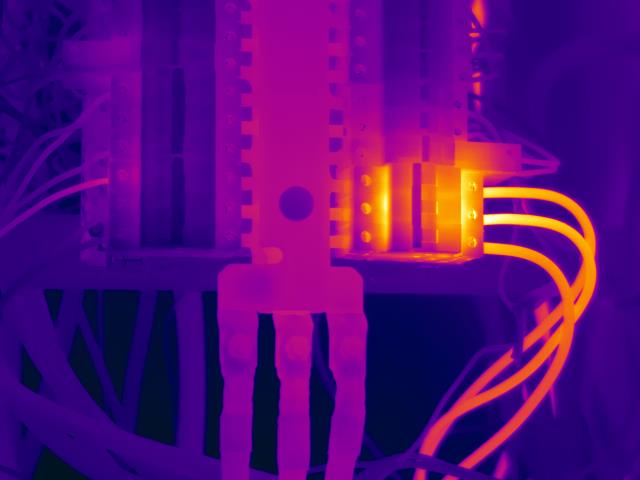
Switchboards, Panels and Electrical Assets Commonly Prioritised for Thermal Imaging
Thermal imaging is typically focused on high-risk or business-critical electrical assets where failure can lead to operational or safety impacts.
Common assets include:
- Main switchboards and sub-boards
- Distribution boards and control panels
- Power factor correction units
- Transformers and motor control equipment
- High-load circuits and critical electrical infrastructure
These assets are commonly found in commercial portfolios, high-rise buildings, hotels, retail centres and mixed-use developments. They are also critical within data centres and infrastructure environments where uptime is essential.
This is often aligned with broader commercial property asset strategies.
What Electrical Thermal Scans Can Detect Before Failure in Sydney Sites
Electrical faults often develop gradually and are not visible during standard inspections. Thermal imaging identifies these issues through abnormal heat signatures, including:
- Loose or deteriorating terminations
- Overloaded or unbalanced circuits
- Undersized cables or connections
- Failing breakers or protective devices
- Degraded or ageing components
- Malfunctioning electrical equipment
By identifying these issues early, electrical thermal scans and reporting in Sydney help reduce the likelihood of unexpected failures and support more controlled, planned maintenance.
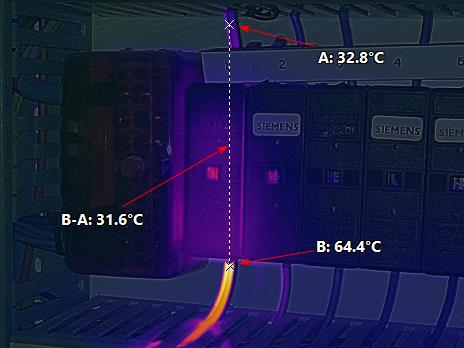
Why Sydney Facilities Teams Book Thermal Imaging and Reporting
For facilities managers and asset owners in Sydney, thermal imaging is primarily used as a preventive maintenance tool. It provides early visibility of developing faults before they lead to failure or unplanned outages, helping reduce fire risk and maintain operational continuity.
It also supports more structured maintenance planning, allowing teams to prioritise repairs based on severity rather than reactive issues. This is particularly important across data centres and critical infrastructure, where continuity matters and unexpected electrical failures can have wider operational consequences.
There is also a strong insurance and risk management driver. Thermal imaging is commonly requested as part of proactive asset management, particularly for complex or high-value assets. For sites managing insurer expectations or documenting inspection outcomes, an insurance thermal scan supports clearer reporting and maintenance planning.
How Thermal Imaging Works Across Sydney Commercial and Critical Sites
The process is structured to provide clear outcomes without disrupting operations.
A typical service includes:
- Initial enquiry and scope confirmation
- Asset identification or review of existing registers
- On-site inspection under normal operating load
- Thermal image capture and analysis
- Severity classification of identified issues
- Delivery of a clear, actionable report
Reports include thermal imagery, issue summaries, severity ratings and recommended next steps. This allows facilities teams and electricians to prioritise work based on risk.
Where required, RCD testing in Sydney can be coordinated in a single visit to streamline compliance requirements.
To arrange inspections or confirm scope, get a quote.
Insurance, Compliance and Preventive Maintenance for Sydney Sites
Thermal scanning is not universally required, but it is commonly adopted as part of preventive maintenance and risk management programs. Thermal imaging supports insurance requirements, internal safety processes, maintenance planning and more informed asset management decisions. This is particularly relevant for sites managing higher-risk or operationally critical electrical infrastructure, including data centres and critical infrastructure.
Insurance-ready reporting is a key outcome, providing clear documentation that inspections have been completed and issues identified. For organisations responding to insurer expectations or audit requirements, an insurance thermal scan supports clear reporting and helps guide maintenance priorities.
How Often Should Electrical Thermal Imaging Be Done in Sydney?
The frequency of electrical thermal imaging depends on asset type, load, environment and overall risk profile. Rather than following a fixed schedule, most organisations align inspections with the criticality of their electrical infrastructure and insurer expectations.
As a general guide, office and retail environments are often inspected every 1–3 years, while higher-load or more demanding environments may require more frequent inspections. Critical assets and infrastructure are typically inspected more frequently, particularly where reliability and continuity are priorities.
In practice, inspection intervals are usually determined as part of a broader maintenance or risk management program, rather than applying a single standard across all sites.
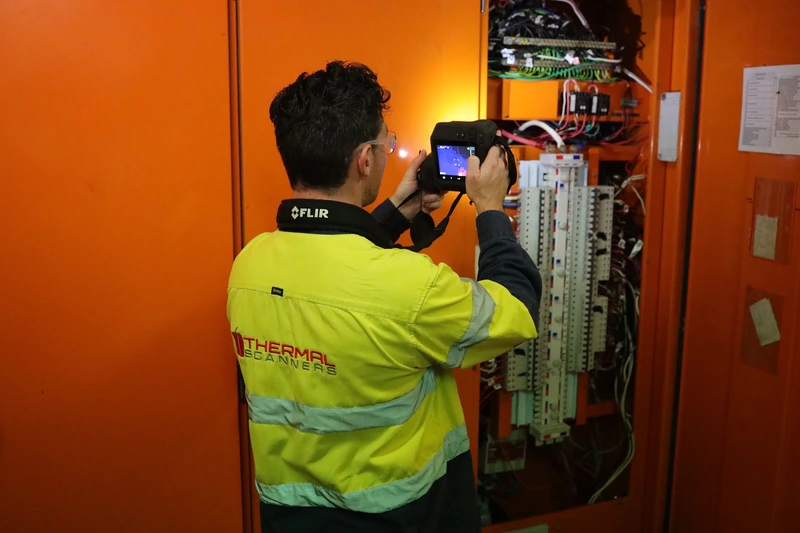
Why Sydney Businesses Choose Thermal Scanners
Thermal Scanners delivers electrical thermography for Sydney sites backed by technical expertise and large-scale project experience. The team brings 30 years of thermography experience and 80 years of combined electrical expertise, supporting inspections across more than 6,000 sites annually.
All inspections are carried out by highly qualified engineers, with a strong focus on accuracy, consistency and reporting quality. These reports are designed to be clear, structured and suitable for audit and insurance use, helping facilities teams make informed maintenance decisions.
The team has delivered inspections across major commercial and infrastructure assets, including Global Switch Data Centre Sydney and Meriton Suites Bondi Junction. Explore more project experience and industry coverage through our clients.
Get a Quote for Thermal Scanning in Sydney
If you require electrical thermal scans and reporting in Sydney for preventive maintenance, fault detection or insurance reporting, the Thermal Scanners team can help define the right inspection scope for your site and electrical assets.
Get a quote or speak with the team about inspection frequency, reporting requirements or coordinating RCD testing as part of your inspection program.
Frequently Asked Questions
How often should electrical thermal imaging be completed?
Electrical thermal imaging is typically completed every 1–3 years for lower-risk environments, with more frequent inspections for high-load or critical assets depending on risk and insurer requirements.
What types of Sydney sites benefit from switchboard thermal imaging?
Commercial buildings, high-rise developments, hotels, data centres and infrastructure sites benefit from switchboard thermal imaging in Sydney, particularly where electrical reliability is critical.
Can Thermal Scanners provide reports for insurance or maintenance planning?
Yes. Electrical thermal scans and reporting in Sydney include clear, structured reports suitable for insurance, maintenance planning and internal risk management.
What issues can electrical thermal scans identify before failure?
Electrical thermal scans can identify loose connections, overloaded circuits, failing components and abnormal heat patterns that indicate developing faults.
Do inspections require power to be turned off?
No. Thermal imaging is completed while the equipment is operating under normal load, so there is no interruption to operations.
Can thermal scanning be coordinated with RCD testing in Sydney?
Yes. Electrical thermal scans and reporting in Sydney can be coordinated with RCD testing as well as other electrical compliance services like emergency exist light testing as part of the same inspection program.