
Cold Room Leak Detection
- Qualified engineers with 30 years of experience
- No interruption to cold room operations
- Inspect under normal operating conditions
- Detailed insurance-compliant reports
- Targeted identification of insulation and panel leakage
- RCD testing also available
Book an inspection
Detect and Fix Cold Room Leaks Fast With Thermal Imaging
Thermal imaging is used to determine how effectively a cold room is maintaining consistent temperatures under normal operating conditions. During the inspection, the process identifies temperature variations across panels, doors and internal surfaces that may indicate insulation failure or cold room panel leakage.
The inspection can reveal ice build-up around door seals or internal walls, compressors running 24/7 without cycling off and thermal patterns commonly associated with unexpectedly high electricity usage. These findings often point to insulation gaps, degraded seals or moisture-affected materials. Through refrigeration thermal scanning, we help isolate the source of energy loss so corrective action can be taken before performance.

Cold Room Thermal Imaging is Essential for Your Business
Cold room thermal imaging is a non-invasive inspection method used to assess thermal performance and identify energy loss in refrigeration infrastructure while it remains operational. By identifying where cold air is escaping and external heat is entering, thermal scanning provides clear insight into insulation condition and overall system efficiency.
Certain areas within cold rooms are more susceptible to thermal leakage, including:
Insulation panel joints
External and internal seals on all entrances and exit points
Floor to ceiling joins and corners
All penetration points, such as electrical or plumbing
All accessible external areas around cold rooms
For accurate results, the cold room must be operational and under normal load during inspection, as temperature differences are necessary to detect thermal faults effectively.
Thermal Scanners also delivers a broader suite of thermographic services, including electrical thermal imaging for switchboards and power infrastructure and mechanical thermal imaging for plant and refrigeration equipment.
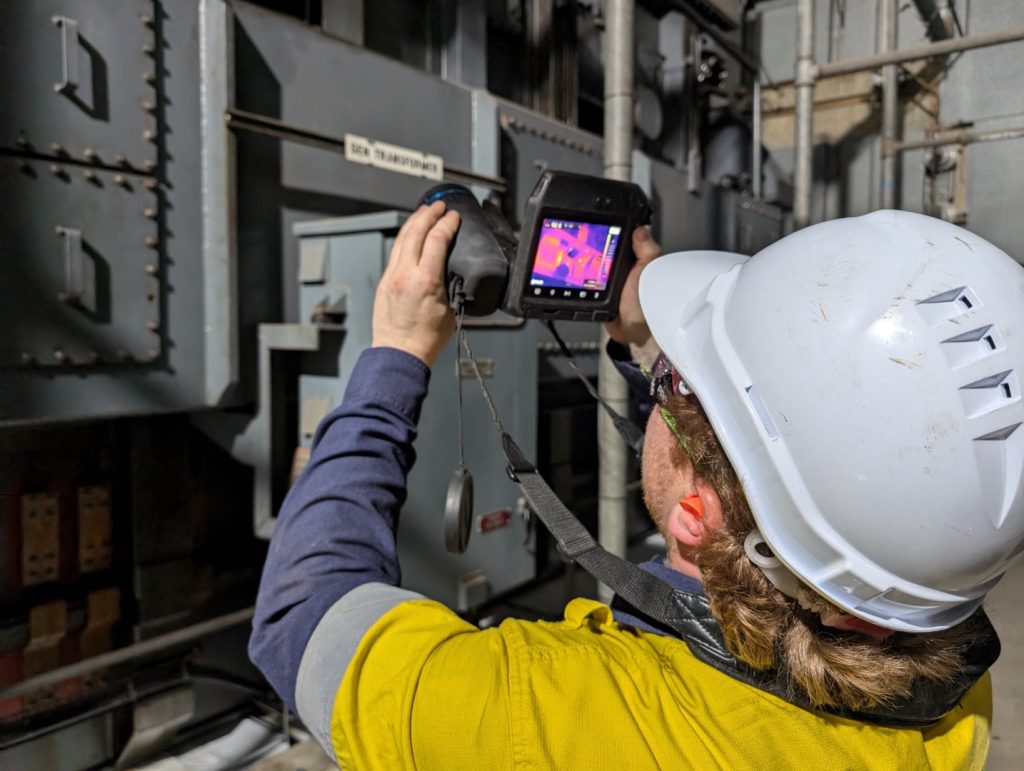
Our Approach to Comprehensive Cold Room Thermal Scanning
Each cold room leak detection inspection follows a structured thermal scanning approach designed to identify insulation defects and energy loss across all critical interfaces. Cold room thermal imaging is applied systematically to ensure high-risk areas are not overlooked.
The inspection process focuses on:
- Panel joints and wall-to-floor seals are where thermal bridging commonly occurs.
- Door frames, seals and gaskets showing signs of warping, compression loss or seal degradation.
- Ceiling cavities and service penetrations where pipes or cables enter the cold space.
- Areas of potential moisture ingress, including wet insulation that can reduce thermal performance and contribute to structural deterioration.
By using refrigeration thermal scanning across these locations, we can accurately locate cold room panel leakage and insulation breakdown, allowing issues to be prioritised based on severity and impact.
Detailed Cold Room Thermal Scanning Reporting
Reports include a defined scope of works and thermal and visual images of all identified exceptions. Each finding is documented with its precise location, the date and time of inspection and a priority rating to assist with remediation planning. Where relevant, reports also outline likely contributing factors, such as insulation failure, unsealed penetrations or seal degradation. All inspections are completed by qualified thermographers, with credentials clearly noted.
This process is commonly undertaken across industrial and manufacturing facilities, where reliable refrigeration performance and clear documentation are essential. The reporting format reflects the requirements of these environments, providing clarity for facility managers, engineers and auditors.
Benefits of Professional Cold Room Leak Detection
Some of the benefits of completing thermal scanning on insulated cold rooms and freezers include:
- Minimising energy loss and reducing unnecessary electricity consumption.
- Reduced risk of spoilage caused by heat intrusion.
- Quality assurance for cold room installation and manufacturing integrity.
- Identification of issues such as insulation gaps, holes or unsealed penetrations.
Thermal imaging is a proven inspection method for insulated refrigeration environments. It is commonly used during commissioning, routine operational checks and when supporting insurance or audit requirements. By uncovering hidden thermal faults that are not visible to the naked eye, cold room thermal imaging helps maintain system performance and supports long-term asset protection.
Frequently Asked Questions
Will the scan disrupt our operations?
No. Cold room thermal imaging is a non-contact, non-invasive inspection method. Cold room leak detection is carried out while refrigeration systems remain fully operational, with no interruption to storage, production or access.
How often should we check for cold room leaks?
An annual cold room leak detection inspection is recommended, particularly ahead of peak Australian summer conditions. Regular thermal scanning helps confirm that insulation and seals can manage increased external heat loads and operating demand.
Can you find leaks in freezer floors?
Yes. Refrigeration thermal scanning can identify thermal patterns consistent with sub-floor heating failures or insulation breakdown beneath freezer floors. These issues are often not visible during routine inspections but can significantly affect performance if left unaddressed.
How Thermal Scanners Help You with Cold Room Insulation Leakage
With more than 30 years of experience in cold room thermal imaging, Thermal Scanners has been widely trusted for examining freezers, cold rooms and supporting infrastructure at government, commercial and industrial locations. Our engineers understand how refrigeration systems behave in real operating conditions and know where insulation failures and leakage issues are most likely to occur.
We take a practical, inspection-led approach. Thermal imaging is used to pinpoint insulation breakdown, panel leakage and other thermal anomalies that can affect energy performance or system reliability. Findings are clearly documented so you can prioritise remedial work, meet audit requirements and make informed decisions.
If you would like to discuss a cold room leak detection inspection or understand whether thermal imaging is appropriate for your site, contact Thermal Scanners.